
Roof Insulation Contractors
Enquire Today For A Free No Obligation Quote
At Roof Insulation Contractors, we specialise in reducing heat loss and improving the energy performance of residential and commercial buildings by installing high-quality insulation within the roof structure.
As up to 25% of a home’s heat can escape through an uninsulated roof, investing in a qualified contractor helps you cut energy costs, reduce your carbon footprint, and protect your property against condensation and moisture damage.
Our experienced team of roof insulation contractors delivers fully compliant, high-performance insulation systems tailored to your property’s age, structure, and energy needs.
Request a free, no-obligation quote for professional roof insulation today.
What Do Roof Insulation Contractors Do?
Roof insulation contractors specialise in the installation, upgrade, and maintenance of thermal insulation within pitched and flat roof structures.
Their role involves surveying the roof, recommending suitable insulation materials, and professionally installing those materials to meet Building Regulations and energy efficiency targets.
Since roof spaces are one of the primary areas for heat loss in a home, insulation contractors help reduce energy bills and improve indoor comfort by sealing this major escape point for warmth.
What Are the Benefits of Hiring Roof Insulation Contractors?
Hiring professional roof insulation contractors ensures that your property receives high-performance insulation that is safe, compliant, and cost-effective.
- Correct installation ensures optimal thermal performance and avoids insulation compression or cold bridging
- Regulatory compliance protects your home’s value and avoids future penalties or building issues
- Guaranteed workmanship provides long-term peace of mind with warranty-backed service
- Expert material selection matches your roof type with the right insulation solution for energy savings
- Improved ventilation management reduces the risk of condensation and extends roof lifespan
- Certified professionals offer insurance-backed services that meet national and local standards
Since insulation is a long-term investment, professional installation delivers better value, performance, and durability than DIY alternatives.
Why Hire Professional Roof Insulation Contractors?
Professional roof insulation contractors bring expertise, compliance, and long-term performance to every project.
They understand the differences between warm and cold roof systems, select the right materials for the building type, and install them in a way that maintains ventilation and structural safety.
Since incorrect insulation can lead to condensation, mould, and voided warranties, qualified contractors ensure that work is completed to current UK standards, with full documentation and manufacturer-backed guarantees.
How Do Roof Insulation Contractors Assess a Property?
Contractors begin with a full on-site inspection to evaluate the existing insulation, roof condition, ventilation pathways, and structural layout.
Thermal imaging or U-value calculations may be used to identify heat loss points and determine whether the insulation meets regulatory standards.
Based on this assessment, the contractor will recommend suitable insulation systems, such as mineral wool for cold lofts, PIR boards for warm roofs, or flat roof insulation with vapour control layers.
Since each property has unique construction features, this initial survey ensures the recommended approach is both effective and compliant.
Are Roof Insulation Contractors Regulated?
While there is no single licensing body for roof insulation contractors, reputable companies are typically accredited through recognised schemes.
Many contractors hold certifications such as TrustMark, PAS 2030, or membership in the National Insulation Association (NIA).
These accreditations confirm that contractors follow best practices in energy efficiency, health and safety, and installation quality.
Choosing a contractor with verified credentials ensures that the work will meet both customer expectations and regulatory requirements.
What Should I Expect During a Roof Insulation Installation?
Once the contract is agreed, the installation process begins with clearing the work area and protecting interior finishes as needed.
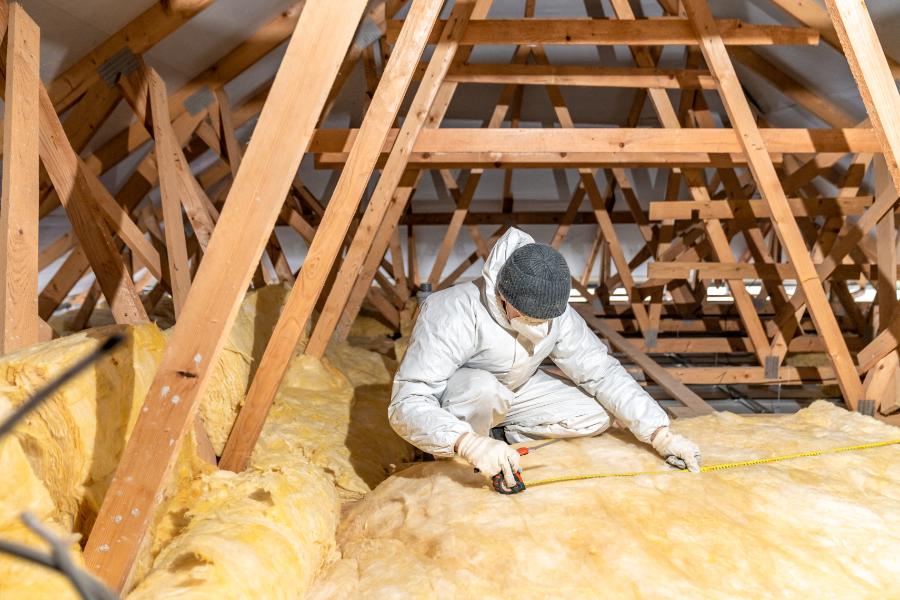
Cold roof insulation involves laying mineral wool between and over ceiling joists, while warm roof installations require applying rigid insulation boards above or below rafters.
In flat roof scenarios, contractors may strip back the roof covering to fit insulation boards and vapour control membranes before reapplying weatherproof layers.
Most domestic installations are completed within 1 to 3 days, depending on access, roof type, and the scale of the project.
How Do I Know If a Roof Insulation Contractor Is Qualified?
A qualified roof insulation contractor will provide proof of accreditation, insurance, training, and previous work experience.
Reputable companies also offer written quotes, clear timelines, and product guarantees, along with references or reviews from past clients.
Customers should ask whether the contractor follows Building Regulations Part L and whether the installed materials meet UK fire and thermal performance standards.
Checking affiliations with government-backed schemes or installer networks can also confirm a contractor’s competence and reliability.
Do Roof Insulation Contractors Offer Guarantees?
Most professional roof insulation contractors offer workmanship and material guarantees for added peace of mind.
Guarantees typically range from 5 to 25 years, depending on the product type and system used, such as rigid insulation boards or breathable membranes.
Contractors may also provide manufacturer-backed warranties if they are approved installers for specific insulation brands.
Customers should ask for a written guarantee that covers installation quality, insulation performance, and any applicable maintenance conditions.
Can Roof Insulation Be Installed Without Removing the Roof?
Roof insulation can often be installed internally without removing the roof structure, depending on the insulation method and roof type.
Cold loft insulation is installed from inside the loft space, while internal warm roof insulation can be applied beneath the rafters behind plasterboard.
However, external warm roof insulation requires temporary removal of roof tiles or coverings to place rigid insulation boards above the rafters.
Contractors assess which method is most practical based on roof design, property age, and whether any re-roofing work is planned.
Will Contractors Remove Old Insulation Before Installing New?
In most cases, existing insulation is left in place unless it is damaged, damp, or no longer effective.
Professional contractors will inspect the current insulation during the initial survey and advise whether it should be topped up or fully replaced.
If removal is necessary, such as when insulation is mouldy, waterlogged, or below regulatory standards, it will be safely extracted and disposed of in accordance with environmental guidelines.
The contractor will then install new insulation that meets the latest U-value targets and ensures proper ventilation is maintained.
Can Roof Insulation Be Done in All Weather Conditions?
Roof insulation can generally be installed in most weather conditions, but certain methods—particularly external insulation—require dry weather.
For internal insulation projects, such as cold loft or between-rafter installations, work can continue year-round as the roof covering remains intact.
However, warm roof systems that require removing roof tiles or felt cannot be installed safely during heavy rain or high winds due to the risk of water ingress or structural compromise.
Contractors typically monitor the weather forecast closely and may reschedule warm roof installations to ensure both safety and installation quality.
What Is the Lifespan of Roof Insulation?
The lifespan of roof insulation depends on the material used, the installation quality, and the conditions within the roof space.
Mineral wool insulation in cold lofts can last 40 years or more if it remains dry and undisturbed, while rigid PIR or phenolic boards used in warm roof systems can last just as long, with minimal degradation over time.
In well-ventilated, moisture-free environments, professionally installed insulation requires no maintenance and retains its thermal efficiency for decades.
If the roof develops leaks or poor ventilation leads to condensation, the insulation’s performance and lifespan may be reduced, so regular roof checks are recommended.
How Quickly Can Roof Insulation Contractors Start a Project?
The lead time for starting a roof insulation project depends on contractor availability, material sourcing, and whether planning permissions are required.
Many reputable contractors can begin within 1 to 3 weeks of the initial survey, especially for standard cold loft insulation jobs.
For warm roof or flat roof insulation, particularly those involving scaffolding or roof coverings, scheduling may take longer to coordinate with roofing teams and external suppliers.
Customers are advised to request a detailed schedule during the quotation process to plan accordingly and ensure minimal disruption to their household.
Will Roof Insulation Make My Home Too Warm in Summer?
Roof insulation is designed to regulate temperature, reducing heat loss in winter and limiting heat gain in summer.
By slowing the transfer of heat through the roof, insulation keeps your home warmer when it’s cold outside and cooler when external temperatures rise.
In homes with south-facing roofs or loft conversions, adding reflective insulation or breathable membranes can further reduce solar heat gain.
Since insulation works as a thermal barrier in both directions, it contributes to year-round comfort rather than overheating, provided ventilation and material selection are handled correctly.
Can I Still Use the Loft for Storage After Insulation?
You can still use the loft for storage after insulation, especially if the insulation is installed below the roof slope (warm roof) or topped with raised loft boarding in a cold loft.
Contractors often recommend combining insulation with a raised subframe system that allows full insulation depth while creating a usable storage platform.
If insulation is compressed by laying boards directly onto joists, its effectiveness will be reduced, so professional systems are installed to prevent this.
Access points for wiring and ventilation are preserved, ensuring the loft remains functional for light to moderate storage after the project is complete.
Is Roof Insulation a Good Investment?
Roof insulation is widely regarded as one of the most cost-effective and long-term home improvements available in the UK.
By reducing annual energy bills and improving EPC ratings, insulation delivers financial and environmental benefits that increase the overall value and comfort of a home.
Where winter heating demand can be high, properly installed roof insulation can result in immediate savings and better control over indoor temperatures.
With typical payback periods of 2 to 5 years and lifespans exceeding 30 years, roof insulation provides excellent return on investment compared to other upgrades.
Can Roof Insulation Help Reduce Damp or Condensation?
Roof insulation can help reduce condensation when installed correctly alongside proper ventilation measures.
Condensation forms when warm, moist air meets a cold surface, such as an uninsulated roof. By keeping roof surfaces warmer, insulation reduces the likelihood of condensation forming.
However, if ventilation is blocked or insufficient, insulation alone may trap moisture and worsen the problem.
Experienced contractors assess ventilation during installation and often add eaves vents, vapour barriers, or breathable membranes to manage humidity and maintain a dry roof space.
Do Contractors Remove Waste and Clean Up After Installation?
Professional roof insulation contractors typically include waste removal and clean-up as part of the service.
This includes disposing of packaging, insulation offcuts, old insulation (if replaced), and protective coverings used during the installation process.
Once the job is complete, installers ensure the loft or work area is left tidy and safe, and any leftover materials are removed in accordance with local waste disposal regulations.
Customers should confirm that waste clearance is included in the quotation to avoid unexpected charges after the work is completed.
Is Roof Insulation Covered by Government Grants?
Roof insulation may be partially or fully funded through government schemes, depending on your eligibility and property type.
In the UK, schemes such as the Energy Company Obligation (ECO4) offer support to qualifying households, including those on low incomes or receiving certain benefits.
Homeowners may also access local council initiatives or green funding programmes designed to reduce fuel poverty and improve energy efficiency.
A professional roof insulation contractor can advise whether your home qualifies and help guide you through the application process to secure available funding.
What’s the Best Type of Roof Insulation for My Property?
The best type of roof insulation depends on your roof structure, how the space is used, and your energy-saving goals.
For unconverted lofts, mineral wool or sheep’s wool is typically used between ceiling joists to create a cold loft.
For habitable lofts or pitched roofs with no loft access, PIR boards, wood fibre, or multifoil insulation may be installed under or above rafters to create a warm roof.
In flat roofs, rigid boards with vapour control layers are common for external insulation, while internal systems are used where access or budget limits external work.
Contractors assess your property to recommend the most effective and regulation-compliant solution based on insulation depth, U-value targets, and ventilation needs.
Can Roof Insulation Be Installed in a Flat Roof?
Roof insulation can be successfully installed in flat roofs using either warm roof or cold roof methods.
In a warm roof setup, rigid insulation boards are laid above the roof deck and covered with waterproof membranes, providing high thermal efficiency and minimal risk of condensation.
Cold flat roofs involve placing insulation between the ceiling joists below the deck, but this method requires precise vapour control and is more prone to moisture issues if ventilation is inadequate.
Most flat roof insulation projects are now completed using the warm roof method, especially when re-roofing is already planned or required.
Get a Free Quote from Trusted Roof Insulation Contractors
If you’re looking to upgrade your insulation or reduce your energy bills, our certified roof insulation contractors are here to help.
We offer free, no-obligation surveys and clear, upfront pricing, so you know exactly what to expect before work begins.
Contact us today to schedule your free quote.
Find More Info
Make sure you contact us today for a number of great roof insulation services.
For more information on roof insulation contractors, fill in the contact form below to receive a free quote today.
★★★★★
Roof Insulation Contractors delivered outstanding results for our home. The team worked efficiently, kept everything tidy, and the insulation quality made an immediate difference in comfort. Their professionalism truly set them apart.
Theron Blackwater
Greater London
★★★★★
We were extremely pleased with the service from Roof Insulation Contractors. They explained every step clearly, completed the job on schedule, and the workmanship was excellent. I would gladly recommend them to anyone looking to improve their home’s efficiency.
Elara Montcliff
Greater London